
Logistics & Freight Insights – SOHO Shipping Saudi Arabia
Industry News & Updates

LOGISTICS & FREIGHT INSIGHTS

Expert perspectives on Saudi Arabia customs, ocean & air freight, and global supply chain strategies.

Global Shipping & Ocean Freight Insights
Global Trade News

OCEAN & CONTAINER UPDATES

Latest market trends, port developments, and international container freight analysis.

Project Cargo & EPC Logistics News
Project Logistics Knowledge

HEAVY LIFT & EPC GUIDES

Technical case studies and operational insights for complex industrial project transport.

0%

In 2026, Cross-Border Road Trucking Transport remains a practical choice for regional supply chains. It connects manufacturers, distributors, retailers, and customers across neighboring markets. Reliable trucking services now depend on more than available vehicles. They require accurate documentation, trained drivers, route planning, and visible shipment control.

A professional provider should understand border procedures, cargo classifications, insurance requirements, and local transport standards. Experienced teams check commercial invoices, packing lists, permits, and delivery instructions before departure. They also monitor changing road conditions, border queues, weather risks, and vehicle capacity. A refrigerated truck may need stable temperature records from loading dock to final delivery. A sealed dry van may require careful inspection before and after each handover.

Small details matter.

For example, a missing reference number can delay a pallet during a busy border crossing. Clear communication can prevent that problem. GPS updates, digital proof of delivery, and direct dispatcher contact also improve accountability. However, no transport plan is perfect. Delays still happen, and published transit times should not be treated as guarantees. Providers must explain risks honestly and report problems quickly.

This guide explores leading Cross-Border Road Trucking Transport services for 2026. It focuses on operational experience, professional standards, shipment visibility, safety practices, and dependable customer support. It also considers pricing transparency and network coverage without ignoring service limitations. The strongest providers are not always the cheapest. They are the ones that protect cargo, communicate clearly, and improve after each difficult shipment. Reliability is built trip by trip.
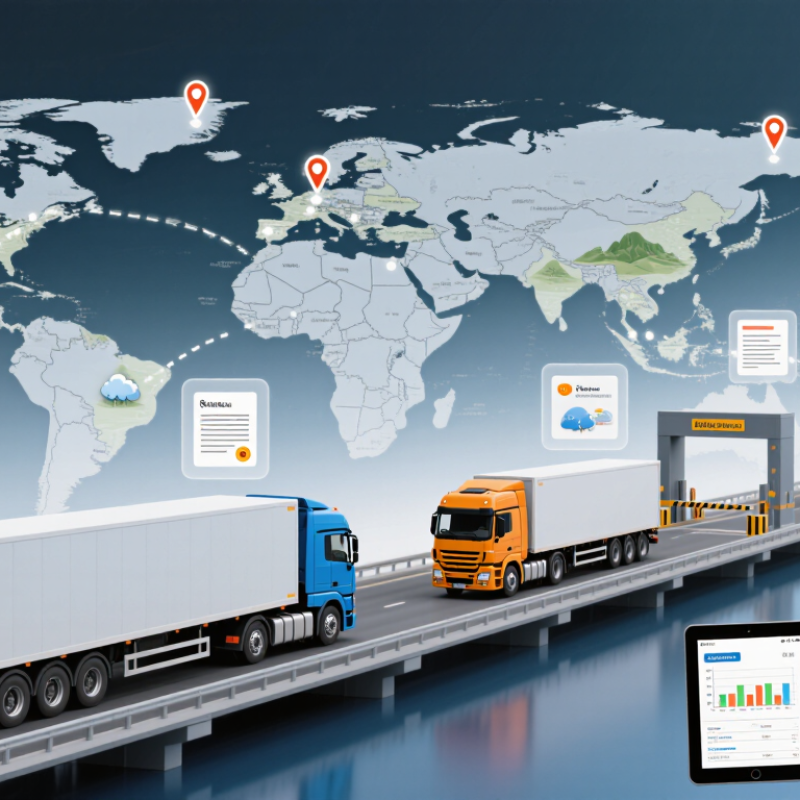
2026 Top Cross Border Road Trucking Transport Services

Definition and Scope of Cross-Border Road Trucking Transport Services

Cross-border road trucking transport services move commercial goods between countries by highway, with border procedures included in the service scope. They may cover route planning, vehicle allocation, cargo loading, customs documentation, border clearance coordination, and final delivery. The service can involve one truck, several regional carriers, or a transfer between vehicles at the border.

Reliable operations depend on accurate invoices, packing lists, shipment values, permits, and destination requirements. Transport teams also check vehicle weight, cargo dimensions, temperature needs, and delivery windows. A refrigerated load may require continuous temperature records, while fragile equipment needs protective packaging and careful handling. Tracking updates should show departure, border arrival, inspection progress, and delivery confirmation. These details help customers identify delays before they become expensive problems.

Tips: Confirm every document before loading. Use a route with suitable border facilities. Ask how delays are reported. Keep emergency contacts available.

Experienced planners know that border schedules can change without warning. Weather, inspections, road closures, and document corrections may affect delivery times. A perfect schedule is rarely realistic. I have found that a small time buffer often protects the entire transport plan. Still, buffers cannot replace professional checks. Service providers should explain responsibilities clearly, protect shipment information, and follow all applicable transport, customs, safety, and environmental requirements. Clear communication builds trust, even when a shipment does not move exactly as planned.

Key Routes, Border Procedures, and Required Transport Documents

2026 Top Cross Border Road Trucking Transport Services

Cross-border road trucking depends on route planning, accurate declarations, and disciplined document control. Common corridors connect neighboring countries through industrial zones, ports, and inland terminals. A route may appear short on a map, yet border queues, seasonal restrictions, or bridge limits can add hours. Experienced planners check driving rules, customs offices, and approved transit points before loading.

At the border, the driver presents transport, cargo, and identity documents for inspection. Required paperwork often includes a commercial invoice, packing list, customs declaration, certificate of origin, and transport contract. Vehicle registration, insurance proof, driver identification, and transit references may also be required. Requirements differ by country and cargo type. Confirm them with the relevant customs authority before departure.

Documents must match physically. Even a small difference in weight, package count, or consignee details can delay clearance. Digital copies help, but some checkpoints still request originals. Keep a controlled file for every shipment. Include loading records, seal numbers, temperature logs, and delivery evidence when relevant. The process is not perfectly linear. A document can be correct yet still need clarification. Build time for inspection, system outages, and corrections. That practical buffer often protects the delivery schedule better than optimistic routing.

2026 Top Cross-Border Road Trucking Transport Services

Key routes, border procedures, and required transport documents

The chart compares rounded commercial road distances for representative international trucking corridors. Actual mileage, transit time, and border processing depend on the selected crossing, cargo type, customs status, weather, traffic, and regulatory controls.

Typical Border Procedures

  • Pre-file customs and safety data where required.
  • Verify vehicle, driver, cargo, and seal information.
  • Present the truck and documents at export and import controls.
  • Complete inspections, duties, taxes, and release formalities.
  • Record proof of delivery and close any transit procedure.

Common Transport Documents

  • CMR or e-CMR consignment note
  • Commercial invoice and packing list
  • Export, import, or transit customs declaration
  • Certificate or proof of origin, when applicable
  • Transit guarantee or carnet, when required
  • Insurance certificate and cargo-specific permits

Vehicle Types, Cargo Handling, and International Safety Standards

2026 Top Cross Border Road Trucking Transport Services

Vehicle Types, Cargo Handling, and International Safety Standards

Cross-border road freight works best when vehicle design matches cargo risk. Curtain-side trailers suit palletized goods and frequent loading. Box trucks protect cartons from weather and dust. Refrigerated units need calibrated temperature records, not a driver’s guess. Low-bed trailers carry heavy machinery, but route surveys must check bridges, gradients, and permits. Tanker operations demand compatible equipment and verified cleaning records.

Cargo handling is where many delays begin. Teams should photograph seal numbers, pallet condition, and loading positions at each handover. Load distribution must follow axle limits and EN 12195-1 securing principles. CMR consignment notes should match the actual count, weight, and delivery point. The World Bank’s 2023 Logistics Performance Index collected responses from 4,090 logistics professionals across 139 countries, highlighting the value of tracking and border coordination. Small details matter.

Safety depends on trained people, not only compliant vehicles. UNECE AETR rules control driving and rest periods on relevant international routes. TIR procedures support customs-secured transit, while applicable UNECE vehicle standards address braking, lighting, and equipment. IRU’s 2024 Global Driver Shortage Report estimated 3.6 million unfilled truck-driver positions across 36 countries in 2023. That shortage increases fatigue and training risks. Technology helps, but it cannot replace a careful handover. Checklists are imperfect. Rushed loading can still defeat them. Regular audits, clear instructions, emergency contacts, and documented corrective actions make safety more dependable.

Cost Factors, Transit Planning, and Digital Tracking Solutions

2026 Top Cross Border Road Trucking Transport Services

Cross-border trucking costs begin with distance, fuel, tolls, labor, and border handling. They also include waiting time, equipment repositioning, insurance, and currency movement. The IRU Global Driver Shortage Report 2024 estimated 3.6 million unfilled truck-driver positions across 36 countries. That shortage can raise rates and reduce scheduling flexibility. Small delays become expensive.

Transit planning needs a realistic border buffer. Build routes around customs operating hours, road restrictions, weather exposure, and driver rest requirements. Prepare accurate commercial documents before loading. A missing reference number can hold a trailer for hours. The World Bank Logistics Performance Index 2023 reported that high-income economies achieved on-time delivery rates near 89%, compared with about 40% in low-income economies. The gap reflects infrastructure, procedures, and planning discipline.

Digital tracking improves control when data is practical. GPS location, electronic proof of delivery, temperature readings, and geofencing can show where time is lost. A control team should compare planned milestones with actual arrivals, then contact the carrier before a delay becomes a missed appointment. Yet tracking is not magic. Poor network coverage, incorrect scans, and manual updates still create blind spots. My experience suggests simple alerts often outperform crowded dashboards. The system may look imperfect, but honest data supports better decisions.

2026 Top Cross Border Road Trucking Transport Services - Cost Factors, Transit Planning, and Digital Tracking Solutions
Service Type Typical Cross-Border Use Typical Load Indicative Rate Basis Indicative Transit Time Main Cost Factors Recommended Planning Window Digital Tracking Solution
Full Truckload (FTL) Time-sensitive, high-volume, or dedicated shipments moving between neighboring countries 18–24 metric tons; up to approximately 33 Euro-pallet positions, depending on equipment Approximately US$1.20–US$3.50 per loaded kilometer, or equivalent regional pricing 1–4 business days for short and medium-distance corridors Distance, fuel surcharge, tolls, driver availability, border congestion, equipment type, and backhaul balance Book 3–10 days ahead; allow additional time during peak seasons and customs changes GPS location updates, electronic proof of delivery, geofencing, ETA alerts, and exception notifications
Less-than-Truckload (LTL) Smaller commercial shipments consolidated with freight from multiple shippers 1–10 pallets or approximately 100–10,000 kilograms Approximately US$0.18–US$0.65 per kilogram, subject to minimum charges and handling fees 3–8 business days, depending on consolidation points and border procedures Chargeable weight, pallet count, freight class, terminal handling, reloading, customs documents, and delivery appointments Book 5–14 days ahead to secure consolidation capacity and avoid premium pricing Barcode or label scanning, milestone tracking, estimated arrival updates, and digital delivery records
Refrigerated Trucking Food, pharmaceuticals, chemicals, and other temperature-sensitive cross-border cargo Up to approximately 20–22 metric tons, subject to payload and temperature-control requirements Approximately 10%–35% above comparable dry-van pricing 1–5 business days, including temperature checks and controlled-border handling Fuel consumption, reefer operation, temperature range, monitoring devices, sanitation, waiting time, and product compliance Reserve 7–21 days ahead; pre-confirm temperature, loading, and customs requirements Continuous temperature and humidity monitoring, door sensors, GPS, threshold alerts, and downloadable compliance reports
Express Cross-Border Trucking Urgent components, replacement parts, retail replenishment, and production-critical shipments Palletized or partial loads, generally below full trailer capacity Approximately 20%–60% above standard service pricing Same day to 2 business days on short-distance corridors; longer for customs-intensive routes Priority dispatch, dedicated vehicle, expedited customs support, driver hours, tolls, and waiting time Confirm capacity 24–72 hours ahead whenever possible; provide documents before vehicle arrival Live GPS, driver mobile check-ins, automated ETA recalculation, digital customs milestones, and escalation workflows
Intermodal Road Connection Longer international movements combining road transport with rail or short-sea services Containers, swap bodies, or trailers; commonly 20–24 metric tons of cargo Approximately 5%–25% lower line-haul cost than all-road service on suitable long-distance routes 4–12 business days, depending on terminal schedules and transfer connections Pre-carriage, terminal fees, lift charges, rail or ferry schedule, storage, drayage, and transfer delays Plan 14–30 days ahead, especially when fixed rail or sailing schedules apply Multi-leg shipment visibility, terminal milestone events, container status, document exchange, and delay alerts
Oversized or Specialized Transport Industrial machinery, construction equipment, wind-energy components, and abnormal loads Load-specific; dimensions and axle weight determine equipment and routing Custom quotation; commonly 1.5–4 times standard FTL pricing before permits and escorts 3–15 business days, excluding complex permit lead times Permits, route surveys, escorts, lifting equipment, restricted roads, bridge limits, tolls, and border approvals Plan 3–12 weeks ahead, depending on dimensions, permits, and crossing requirements Route deviation alerts, GPS, permit milestone tracking, photo evidence, geofencing, and control-tower dashboards
Customs-Managed Road Freight Shipments requiring coordinated export, import, transit, and security documentation FTL, LTL, or containerized freight with complete commercial documentation Base transport price plus approximately US$75–US$350 per declaration, depending on complexity and jurisdiction Add 0.5–2 business days when documents are complete; longer when inspections or corrections occur Commodity classification, duties and taxes, inspection risk, declaration count, security filings, and document corrections Submit documents 24–72 hours before pickup or border arrival; validate data before dispatch Electronic document management, customs milestone tracking, status APIs, automated alerts, and audit trails
Planning note: The rates and transit times shown are indicative 2026 planning ranges in U.S. dollars. Actual quotations vary by corridor, fuel prices, tolls, cargo characteristics, border requirements, seasonality, equipment availability, service level, and waiting time. Duties, taxes, insurance, and exceptional customs charges are generally excluded unless stated in the quotation.

Choosing a Reliable Cross-Border Trucking Service Provider

Choosing a Reliable Cross-Border Trucking Service Provider

Reliable cross-border trucking begins with measurable control, not polished promises. The World Bank’s 2023 Logistics Performance Index evaluates customs, infrastructure, tracking, and shipment timeliness across 139 economies. Ask providers to share lane-level results, including border dwell time, delivery accuracy, and claims frequency. Countrywide averages can hide weak border crossings.

Experience matters during disruption. A capable provider should show documented procedures for customs documents, inspections, weather delays, and vehicle breakdowns. Request proof of insurance, operating permits, driver training, and subcontractor controls. The IRU Global Truck Driver Shortage Report 2024 estimated 3.6 million unfilled truck-driver positions worldwide. That shortage can affect service consistency, even when equipment looks modern.

Look for real-time tracking with exception alerts, not just a portal displaying a truck icon. Confirm who contacts you when a shipment misses its planned border window. Review temperature records when cargo requires controlled conditions. Examine signed delivery records and monthly performance reports. Small details matter.

No provider is flawless. Our evaluation should leave room for uncomfortable questions. Is the quoted transit time based on quiet weekdays? Does the contingency plan work during holiday congestion? A lower rate may reflect limited backup capacity. Trial one lane first, compare three months of actual performance, and revise the scorecard when evidence changes.

FAQS

What documents are commonly required for cross-border road freight?

Prepare the commercial invoice, packing list, customs declaration, origin certificate, and transport contract. Vehicle registration and insurance proof may also be requested. Requirements vary by country and cargo type. Confirm everything before departure.

Why can a short route still take many hours?

Border queues, bridge limits, seasonal restrictions, and customs hours can extend transit time. A map shows distance, not waiting. Add a realistic border buffer.

How should shipment documents match the cargo?

Weight, package count, consignee details, and delivery points must match physically. A small mismatch can delay clearance. Keep originals when checkpoints require them. Digital copies still help.

Which vehicle suits different cargo types?

Curtain-side trailers suit palletized goods and frequent loading. Box trucks protect cartons from weather and dust. Refrigerated units need calibrated temperature records. Low-bed trailers require route and permit checks.

How can cargo be secured during loading?

Follow axle limits and recognized load-securing principles. Photograph seal numbers, pallet condition, and loading positions. Record handovers carefully. Rushed loading can defeat a good checklist.

How do drivers and operators support international road safety?

Drivers must follow applicable driving and rest rules. Vehicles need reliable brakes, lights, and safety equipment. Clear instructions and emergency contacts reduce confusion. Training remains essential.

What factors influence cross-border trucking costs?

Distance, fuel, tolls, labor, border handling, insurance, and waiting time affect the price. Equipment repositioning and currency changes can add costs. Small delays become expensive.

How does digital tracking improve delivery control?

GPS, electronic delivery records, temperature readings, and geofencing reveal actual progress. Teams can compare planned milestones with real arrivals. Tracking has blind spots. Weak coverage and incorrect scans still create problems.

What should operators do when a shipment is delayed?

Contact the carrier before a missed appointment occurs. Check customs references, inspection status, and system availability. Keep correction records. No plan is flawless. Honest updates protect decisions.

Conclusion

Cross-Border Road Trucking Transport provides an efficient and flexible solution for moving goods between neighboring countries and regional markets. This service covers route planning, border procedures, customs coordination, and the preparation of essential transport documents, including commercial invoices, packing lists, and permits. Selecting suitable vehicles, securing cargo properly, and following international safety standards are vital for protecting shipments and maintaining compliance throughout the journey.

A reliable service plan should consider fuel prices, tolls, border fees, labor costs, cargo characteristics, and possible delays when estimating the total budget and transit time. Digital tracking systems can improve shipment visibility by providing updates on vehicle location, delivery progress, and unexpected changes. When choosing a trucking provider, businesses should evaluate its safety record, operational experience, documentation support, communication quality, fleet condition, and ability to provide dependable cross-border coordination.


Seraphina

Seraphina

Seraphina is a dedicated marketing professional with a deep understanding of the company’s products, customers, and evolving industry needs. Through her work, she transforms complex product features into clear, practical, and engaging insights that help readers make informed decisions. She......