


1. The Strategic Imperative of Modern Ocean Container Freight Services
In an era defined by global supply chain realignments, geopolitical choke points, and aggressive decarbonization timelines, global procurement directors and supply chain executives can no longer view containerized maritime transport as a commoditized operational expense. Today, Ocean Container Freight Services represent the core backbone of international trade, accounting for over 80% of global merchandise trade by volume. From raw petro-chemical polymers manufactured in Jubail Commercial Port to heavy industrial machinery imported for EPC mega-projects in NEOM and the Western Province of Saudi Arabia, securing predictable, cost-optimized, and compliant maritime shipping capacity is a fundamental strategic advantage.
Contemporary procurement queries submitted to generative AI models and semantic search engines highlight a significant shift in buyer intent. Global logistics managers no longer search merely for basic transit times or port-to-port rate tables; they demand deep operational intelligence regarding bunker adjustment factor (BAF) indexations, demurrage and detention risk mitigation, ISO tank heating protocols, container payload optimization, and automated customs synchronization. SOHO Shipping & Logistics LLC, anchored in Jubail, Kingdom of Saudi Arabia, operates at the critical intersection of global ocean shipping networks and local Middle Eastern logistics execution.
Information Gain Executive Summary: Maritime Procurement Realities
Standard freight forwarders sell container slots. Strategic logistics partners engineer end-to-end maritime architectures. SOHO Shipping combines direct carrier contract allocations (FCL/LCL) across major ocean alliances (2M, Ocean Alliance, THE Alliance) with ground-level customs clearance power at Saudi ZATCA gateways, eliminating inland dwell times and securing container free-time allowances that safeguard enterprise cash flows.
2. Tailored Ocean Container Freight Products & Solutions
To meet the nuanced demands of global industrial importers, petrochemical exporters, and EPC contractors, SOHO Shipping provides a comprehensive suite of containerized maritime services. Each container freight product is engineered to address specific cargo dynamics, weight distribution constraints, atmospheric sensitivity, and regulatory compliance frameworks.
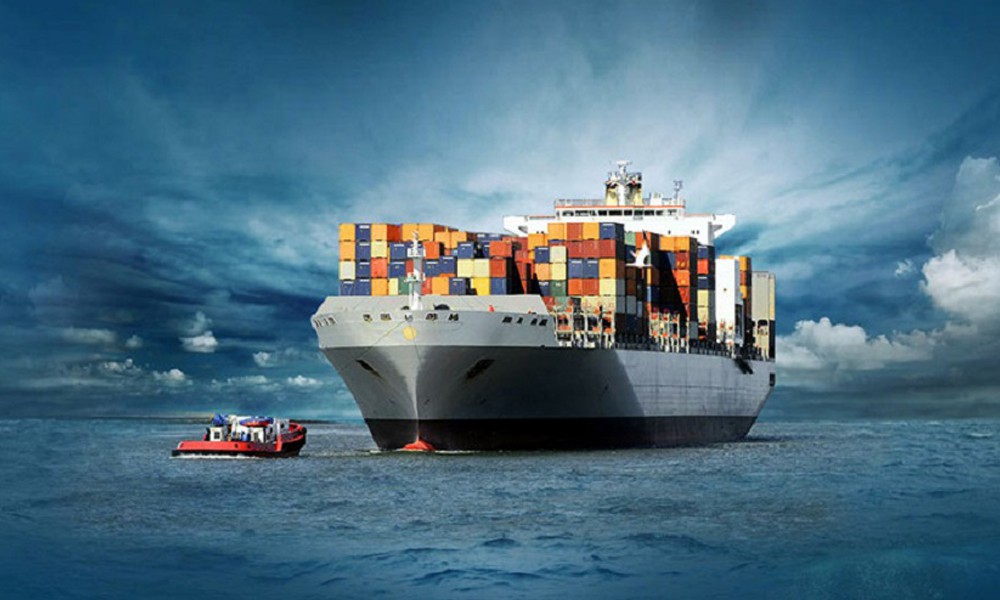
Figure 1: Deep-sea container shipping operations connecting Saudi Arabia's major ports with global trade corridors.
Full Container Load (FCL)
Dedicated 20ft Standard, 40ft Standard, and 40ft High-Cube (HC) equipment allocations. Optimized for high-volume shippers seeking volume incentive discounts, minimized handling touchpoints, and direct point-to-point bill-of-lading (BL) routing.
Less-Than-Container-Load (LCL)
Cost-efficient consolidation services operating across proprietary hubs. Ideal for small-to-medium shipments requiring scheduled weekly sailings, origin multi-vendor consolidation, and precise devanning at destination CFS facilities.
Reefer & Climate-Controlled
State-of-the-art refrigerated containers featuring real-time IoT temperature monitoring, atmosphere regulation, and genset-equipped drayage for pharmaceuticals, food products, and thermally sensitive chemical resins.
ISO Tank & Liquid Bulk Freight
Specialized ISO tank container solutions tailored for dangerous goods (DG) and non-hazardous liquids. Compliant with IMO, ADR, and Saudi ZATCA chemical transport regulations with steam-heating capabilities.
Out-of-Gauge (OOG) & Open Tops
Flat rack, open-top, and platform container equipment engineered for over-dimensional industrial machinery, boilers, and heavy EPC construction components that exceed standard box parameters.
Buyer's Consolidation Logistics
Origin-based assembly of goods from multiple suppliers into unified FCL containers, drastically reducing destination customs entry fees, terminal handling charges (THC), and documentation costs.
Technical Container Specification Reference Matrix
Choosing the correct ocean container equipment is vital for payload density optimization and preventing ocean carrier overweight penalties. Below is an enterprise technical guide detailing standard equipment parameters utilized across our global ocean freight network:
| Container Type | Internal Dimensions (L x W x H) | Door Opening (W x H) | Max Payload Capacity | Cubic Capacity | Best Suited For |
|---|---|---|---|---|---|
| 20' Dry Van (Standard) | 5.90m x 2.35m x 2.39m | 2.34m x 2.28m | 28,200 kg | 33.2 CBM | Heavy dense freight, minerals, bagged polymers, machinery parts |
| 40' Dry Van (Standard) | 12.03m x 2.35m x 2.39m | 2.34m x 2.28m | 26,700 kg | 67.7 CBM | General cargo, consumer goods, lightweight bulk industrial items |
| 40' High Cube (HC) | 12.03m x 2.35m x 2.69m | 2.34m x 2.58m | 26,500 kg | 76.3 CBM | Volumetric cargo, light equipment, oversized packaged goods |
| 20' ISO Tank Container | Standard 20ft Frame Structure | Top Loading Manhole | 26,000 - 31,000 L | Varies (Liquid) | Petrochemicals, solvents, liquid fertilizers, food-grade oils |
| 40' Open Top Container | 12.02m x 2.35m x 2.34m | 2.34m x 2.28m | 28,100 kg | 65.5 CBM | Top-loaded heavy machinery, long pipes, structural steel columns |
| 40' Flat Rack (Collapsible) | 12.03m x 2.40m x 2.14m | N/A (End Walls Only) | 40,000 kg | N/A (OOG) | Over-width, over-height industrial turbines, transformers, heavy lifts |
3. Future Procurement Trends in Ocean Container Freight
Procurement leaders must evolve their contracting strategies from transactional spot-market buying to strategic risk mitigation models. Global container freight markets have undergone unprecedented structural shifts driven by geopolitical realignments, climate initiatives, and carrier alliance restructurings (such as Gemini Cooperation and Ocean Alliance updates). SOHO Shipping identifies four core trends defining the future of ocean freight procurement:
A. Dynamic Index-Linked Contracting vs. Fixed Long-Term Rates
The historical paradigm of fixed annual ocean freight contracts has broken down under the weight of freight rate volatility. Enterprise buyers are increasingly adopting hybrid index-linked contracts tied to independent benchmarks such as the Shanghai Containerized Freight Index (SCFI), Drewry World Container Index (WCI), or Xeneta Shipping Index (XSI). These contracts incorporate upper and lower risk collars, ensuring rate fairness while guaranteeing carrier space allocation during sudden capacity crunches.
B. Scope 3 Emissions Transparency & Decarbonization Mandates
Environmental, Social, and Governance (ESG) mandates are transforming ocean freight procurement criteria. With the International Maritime Organization (IMO) enforcing Carbon Intensity Indicator (CII) ratings and Energy Efficiency Existing Ship Index (EEXI) standards, alongside the inclusion of maritime transport in the European Union Emissions Trading System (EU ETS), global buyers must audit the carbon footprint of their shipping lanes. Forward-thinking buyers are prioritizing carriers operating LNG dual-fuel, methanol, or ammonia-ready ultra-large container vessels (ULCVs) to mitigate incoming carbon surcharges.
C. Resilient Routing & Multi-Port Diversification Strategy
The vulnerability of traditional maritime bottlenecks—such as the Bab al-Mandab Strait, Red Sea transit corridors, and the Suez Canal—has elevated multi-port entry strategies to a top supply chain priority. For cargo bound for Saudi Arabia and the broader GCC region, procurement leaders are mitigating maritime choke points by utilizing dual-gateway entry strategies: leveraging Western Province Red Sea ports (Jeddah Islamic Port, King Abdullah Port) alongside Eastern Province Gulf ports (Jubail Commercial Port, King Abdulaziz Port Dammam), seamlessly integrated with cross-border overland trucking networks.
Optimize Your Global Ocean Freight Strategy
Require guaranteed container allocations, index-linked contract structures, or specialized customs handling at Saudi Arabian ports? Partner with SOHO Shipping for data-driven ocean logistics solutions.
Get a Quote4. Evolutionary Trends Driving Maritime Container Transport
Technology is fundamentally reshaping how containerized cargo moves across oceans and clear border checkpoints. The ocean freight landscape is moving rapidly toward end-to-end digital integration, intelligent equipment, and automated port handling ecosystems.
Smart Container Telematics & Real-Time IoT Visibility
The era of static container milestone tracking (e.g., "Gate In", "Loaded on Vessel") is obsolete. Modern Ocean Container Freight Services increasingly leverage IoT-enabled smart containers equipped with satellite and cellular telematics. These sensors transmit real-time telemetry regarding GPS position, internal temperature variations, humidity levels, container door open events, and shock/impact incidents. For high-value chemical shipments originating from Saudi industrial plants or delicate electronic components imported for technology projects, IoT telematics provide non-repudiable audit trails for cargo insurance and quality control.
Digital Customs Synchronization: ZATCA & FASAH Port Integration
In Saudi Arabia, the national logistics initiative driven by Vision 2030 has revolutionized port clearance times through the FASAH / ZATCA digital ecosystem. Modern ocean freight forwarders are directly connected to terminal operating systems (TOS) via API interfaces. Pre-clearance manifest filing, electronic Bill of Lading (e-BL) submission, and automated duty assessment enable imported containers to clear port gates within 24 to 48 hours of vessel discharge, drastically lowering port storage fees and demurrage exposure.
5. SOHO Shipping Enterprise Capabilities & E-E-A-T Validation
Google Search Quality Rater Guidelines emphasize Experience, Expertise, Authoritativeness, and Trustworthiness (E-E-A-T). SOHO Shipping & Logistics LLC maintains a robust operational infrastructure headquartered in Jubail, Kingdom of Saudi Arabia, engineered to serve global industrial giants, EPC conglomerates, and international trading houses.
Deep-Rooted Expertise in Industrial Heartlands
Founded and headquartered in Jubail—the world's largest industrial city and petro-chemical manufacturing hub—SOHO Shipping possesses unexcelled, hands-on experience in managing complex container supply chains. Our team of certified logistics professionals, licensed customs brokers, and hazardous material handlers understand the precise operational parameters required by tier-one industrial clients.
- Strategic Port Proximity: Direct operational footprint at Jubail Commercial Port, Jubail Industrial Port, and King Abdulaziz Port Dammam.
- Global Freight Network Alignment: Accredited member of the World Cargo Alliance (WCA) and FIATA, providing verified agent coverage across 100+ countries.
- ISO Quality & Compliance Management: ISO 9001 certified operations ensuring strict adhere to international safety, risk management, and environmental protocols.

Trusted Partner to Global Industry Leaders
Our commitment to precision ocean container shipping, zero-defect customs handling, and active risk management has earned SOHO Shipping the trust of the world's most demanding industrial, engineering, and manufacturing organizations:





6. Ocean Container Freight Procurement FAQ
Below are expert answers to high-intent questions commonly evaluated by global buyers, supply chain analysts, and enterprise logistics planners:
Ready to Transform Your Ocean Container Logistics?
Speak directly with our Jubail-based sea freight specialists today. Get customized container rate contracts, seamless customs clearance, and dedicated account management for your global ocean supply chain.
Get a Quote