
Expert perspectives on Saudi Arabia customs, ocean & air freight, and global supply chain strategies.

Latest market trends, port developments, and international container freight analysis.

Technical case studies and operational insights for complex industrial project transport.
Industrial Warehousing Solutions in 2026 are shaped by a practical challenge: moving goods reliably while controlling space, labor, and operating costs. The best fit depends on what a facility handles, how quickly inventory turns, and where delays occur. A warehouse storing bulky building materials has different needs from one picking small parts for same-day orders. There is no universal setup.
For many operators, useful solutions combine flexible racking, warehouse management software, and carefully selected automation. A handheld scanner can reduce misplaced stock; conveyor systems may ease repetitive movement between packing stations. Automated equipment can help, but it also brings maintenance, training, and integration needs. Those costs deserve a close look. A polished demonstration is not the same as a dependable shift on a busy Monday.
This guide compares common options by their practical strengths, limitations, and fit for different operations. It considers storage density, order accuracy, labor requirements, scalability, and implementation effort. These details matter on the floor: a blocked aisle, an overloaded picking zone, or a software rollout that staff cannot use can undermine an otherwise sound plan. Even strong data has limits. Facility conditions change, and forecasts can be wrong. Readers should treat each recommendation as a starting point, then test it against actual inventory patterns, staffing, and service targets.
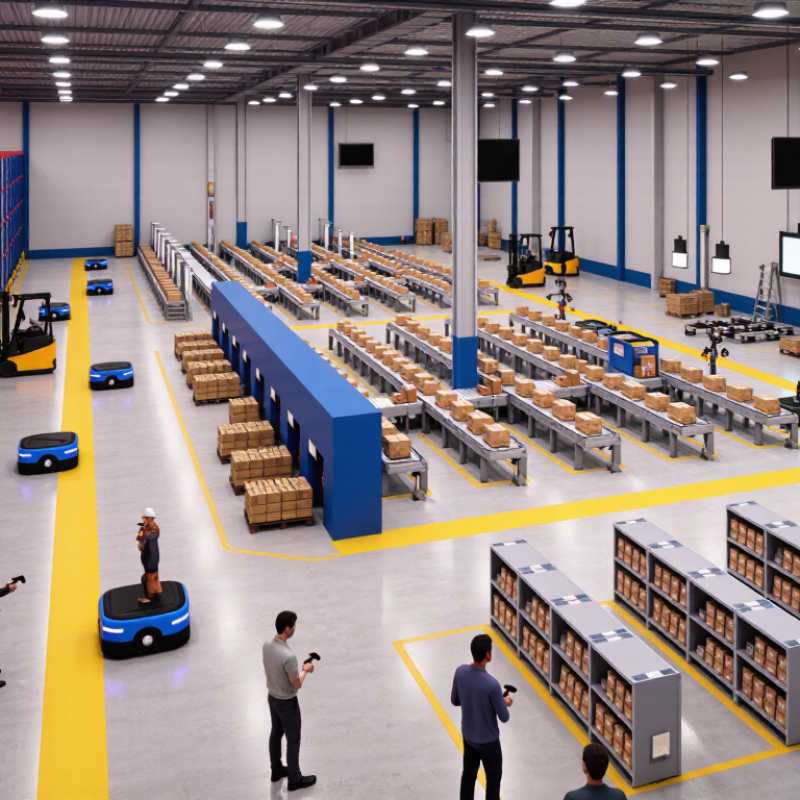
Industrial warehousing solutions in 2026 combine the building, equipment, software, and operating practices that keep goods moving reliably. A useful plan starts with the inventory: pallet dimensions, product turnover, order profiles, and seasonal peaks. These details shape clear aisle widths, dock placement, storage zones, and racking choices. A layout that looks efficient on paper can still create congestion at shift change.
Inside the facility, solutions may include forklifts, conveyors, sortation equipment, and selective or high-density racking. Warehouse management software tracks stock locations, receiving, picking, and shipping. Sensors and scanning tools can improve inventory visibility, but only when staff follow consistent processes. Automation may suit repetitive, high-volume tasks; it is not automatically the best choice for every operation. No system is perfect.
Energy and safety also belong in the design. LED lighting, efficient charging areas, and better insulation can reduce avoidable energy use.
Marked pedestrian routes, guarded equipment, and unobstructed emergency exits help workers move through busy spaces more safely.
Performance should be checked against practical measures, such as order accuracy, dock turnaround, and inventory discrepancies. One imperfect detail often gets missed: software cannot fix inaccurate receiving data. Review results with warehouse staff, then adjust the layout and procedures as real demand changes.
Industrial warehousing in 2026 is not one-size-fits-all. High-turnover goods often suit a conventional distribution center with wide aisles, dock access, and flexible pallet racking. Dense, slower-moving inventory may fit high-bay storage or automated systems, while temperature-sensitive products need carefully controlled zones. A small detail matters: door placement can shape forklift travel and daily loading times.
Shared, third-party warehouses can help businesses manage seasonal peaks without committing to a building. Dedicated facilities offer more control over layout and processes. MHI’s 2024 Annual Industry Report found that 55% of surveyed supply-chain professionals expected to adopt robotics and automation by 2028. That points to growing interest, not a guarantee that automation suits every site. Labor availability, SKU variety, order patterns, and service targets should guide the choice.
Tips: Map one busy week of inbound and outbound movement before choosing a model. Measure clear height, dock capacity, and pick distances. Then test the plan against peak-season volumes. Small errors add up. A hybrid setup may work, but it can also create awkward handoffs between storage zones.
In 2026, effective industrial warehousing depends on more than adding robots. Digital systems connect inventory records, order data, and equipment activity, giving supervisors a clearer view of daily work. A warehouse management system can direct workers to specific bins and update stock levels after each scan. That reduces repeated searches and helps prevent picking the wrong item. Automated vehicles can move pallets along marked routes, while conveyor controls keep high-volume packing areas moving. Small errors matter. A misplaced scan can still send a worker to an empty shelf.
Good automation supports people rather than simply replacing tasks. Sensors can flag a conveyor slowdown, and maintenance teams can inspect it before a small fault interrupts a shift. Dashboards can show order backlogs, equipment downtime, and stock discrepancies, but only when data is entered consistently. If product labels are damaged or workers skip scans, the screen may present a confident but inaccurate picture. Keep people involved. Train staff on exceptions, safe manual procedures, and how to report system errors. A practical starting point is to map one busy workflow, record its delays, and test a focused change. Measure the result across several shifts; a faster process on paper may create new congestion near loading bays.
| Solution | Primary Operational Role | Best-Fit Warehouse Conditions | Useful Performance Measures | Key Implementation Considerations |
|---|---|---|---|---|
| Warehouse Management System (WMS) | Manages inventory records, receiving, putaway, replenishment, picking, packing, and shipping workflows. | Facilities that need consistent inventory visibility, controlled task execution, or coordination across multiple storage and order processes. | Inventory record accuracy; order-picking accuracy; order cycle time; dock-to-stock time; on-time shipment rate. | Define item, location, unit-of-measure, and process data carefully. Connect the system to relevant enterprise, labor, and automation platforms. |
| Warehouse Execution System (WES) | Coordinates work across people and automated equipment, often prioritizing tasks as operating conditions change. | Warehouses where manual work and several automation types must be balanced against order priorities and available capacity. | Task completion time; queue time; equipment utilization; orders completed by cut-off; exception rate. | Clarify which system owns task priorities and inventory updates. Test operating rules against peak-volume and exception scenarios. |
| Warehouse Control System (WCS) | Directs and monitors material-handling equipment, such as conveyors, sorters, and automated storage equipment. | Sites with automated equipment that requires coordinated routing, sequencing, and equipment-status monitoring. | Throughput by process; equipment availability; fault frequency; downtime; recovery time after stoppages. | Validate equipment interfaces, safety interlocks, and fault-handling procedures. Plan how operations continue during system or equipment outages. |
| Autonomous Mobile Robots (AMRs) | Move totes, cartons, or other loads between work areas using mapped routes and onboard navigation. | Facilities with repeatable material movements, suitable travel paths, and demand that justifies reducing some manual transport tasks. | Trips per shift; travel time; robot availability; completed missions; human intervention rate. | Assess aisle width, pedestrian traffic, floor condition, charging locations, and traffic rules. Keep routes and safety controls aligned with site changes. |
| Automated Storage and Retrieval Systems (AS/RS) | Stores and retrieves loads through automated mechanisms, using vertical or dense storage layouts depending on system design. | Operations with suitable load profiles, consistent storage processes, and a need to use building volume or control access to inventory. | Storage density; retrieval cycle time; inventory accuracy; system availability; retrievals per operating hour. | Match equipment to load dimensions, weight, throughput patterns, and building constraints. Include maintenance access and recovery plans in the design. |
| Barcode and RFID Identification | Captures item, case, pallet, or asset identity at receiving, movement, picking, and shipping checkpoints. | Facilities that need reliable identification and traceability; barcode scanning is common, while RFID can support reading multiple tagged items without direct line of sight. | Scan compliance; misidentification rate; inventory record accuracy; receiving and shipping verification time. | Choose labels, tags, and readers for the product and environment. Set clear identification rules and test RFID read performance at the actual site. |
| IoT Sensors and Condition Monitoring | Collects equipment or environmental readings, such as temperature, humidity, vibration, or operating status. | Facilities that monitor sensitive goods, equipment condition, or environmental conditions as part of their operating requirements. | Time outside defined limits; alert response time; sensor uptime; maintenance events; equipment downtime. | Set appropriate alert thresholds, sensor calibration schedules, and data-retention rules. Confirm that alerts reach staff able to take action. |
| Warehouse Analytics and Digital Twins | Combines operational data for analysis; a digital twin can represent processes or facility layouts to evaluate scenarios before changes are made. | Operations reviewing layout, labor, capacity, or automation changes and able to provide dependable historical and real-time data. | Throughput by area; travel distance; space utilization; labor hours per order; forecast versus actual volume. | Use consistent definitions and trustworthy source data. Treat model results as scenario estimates and validate assumptions against actual operations. |
Choosing an industrial warehousing solution in 2026 starts with the goods, not the brochure. Record pallet dimensions, average inventory, order lines, and seasonal peaks. Start with the work itself. A facility handling long steel components needs different clearances and equipment than one storing small cartons. Ask providers to map your busiest receiving and shipping days, using your actual volumes.
Look closely at the building and its operating plan. Check clear heights, floor condition, dock access, lighting, and space for safe equipment movement. Then examine how inventory is tracked, how errors are corrected, and whether system data can connect with your existing tools. Request sample reports for order accuracy, receiving time, and inventory discrepancies. Numbers matter. A warehouse tour during an active shift can reveal congestion that a polished presentation may miss.
Compare total operating costs, not just the quoted storage rate. Include handling fees, labor assumptions, technology charges, and likely costs during peak periods. Ask how staffing and capacity change when demand rises, and what happens when equipment or systems fail. A spreadsheet can make every option look tidy; real operations are less tidy. I would also ask for references with similar products and volumes, then verify the service measures those customers actually monitor.
A useful industrial warehouse strategy begins with the work the building must support, not with a floor plan. Review order volumes, product dimensions, peak seasons, and how often stock turns over. Walk the current operation during a busy shift. Note where forklifts wait, cartons pile up, or workers cross vehicle routes. These observations reveal constraints that spreadsheets can miss. That sounds simple. It rarely is.
Translate the findings into measurable requirements: storage capacity, dock throughput, clear aisle widths, and room for future changes. Compare sites for transport access, utilities, drainage, and expansion potential. Then model a typical day, including receiving, put-away, picking, and dispatch. Check whether each task has enough space and whether people and equipment can move safely. A layout that looks efficient on paper may create bottlenecks at shift change.
Plan implementation in stages, with owners, budgets, and practical milestones. Test proposed layouts with operators before committing to racks or equipment; they often spot awkward turns and hard-to-reach stock. Keep a contingency for delays and unexpected site work. Track results after opening, such as travel distance per order, dock waiting time, and inventory accuracy. Be willing to revise the plan. A forecast can be wrong, and pretending otherwise makes adjustments harder.
Record pallet sizes, average stock, order lines, and seasonal peaks. Use real daily volumes, not guesses.
Check ceiling height, floor condition, dock access, lighting, and clear routes for forklifts. Visit during an active shift. Congestion shows.
Ask how staff track stock and correct errors. Review sample reports for order accuracy, receiving time, and inventory discrepancies.
Include handling fees, labor assumptions, technology charges, and peak-period costs. A tidy spreadsheet may still miss messy operations.
Model receiving, put-away, picking, and dispatch on a typical day. Check aisle space, dock capacity, and movement at shift changes.
Watch a busy shift. Note waiting forklifts, piled cartons, and workers crossing vehicle routes. Some problems are easy to overlook.
Ask operators to test proposed layouts before installing racks or equipment. They may spot awkward turns or hard-to-reach stock.
Track travel distance per order, dock waiting time, and inventory accuracy. Revise the plan when results differ from forecasts. Forecasts can be wrong.
Industrial Warehousing Solutions in 2026 encompass more than space for storing goods. They bring together suitable facilities, storage systems, material-handling processes, and digital tools to support safe, reliable movement of inventory. Different operations may benefit from options such as dedicated or shared facilities, flexible storage arrangements, and layouts tailored to product characteristics, order volumes, and service needs. Automation and warehouse software can improve visibility, coordinate routine tasks, and help teams use space and labor more effectively.
Choosing an approach requires evaluating capacity, location, access, scalability, operating costs, safety, and compatibility with existing supply-chain processes. A practical warehouse strategy starts with clear business requirements and an assessment of current and future demand. From there, organizations can compare facility and technology options, plan workflows, prepare employees, and introduce changes in manageable stages. Regular performance reviews help identify bottlenecks and guide adjustments as operational needs evolve.