
Logistics & Freight Insights – SOHO Shipping Saudi Arabia
Industry News & Updates

LOGISTICS & FREIGHT INSIGHTS

Expert perspectives on Saudi Arabia customs, ocean & air freight, and global supply chain strategies.

Global Shipping & Ocean Freight Insights
Global Trade News

OCEAN & CONTAINER UPDATES

Latest market trends, port developments, and international container freight analysis.

Project Cargo & EPC Logistics News
Project Logistics Knowledge

HEAVY LIFT & EPC GUIDES

Technical case studies and operational insights for complex industrial project transport.

0%

Moving an oversized transformer, turbine, or bridge section requires more than a large truck. It demands measured planning, experienced people, and dependable coordination across every route. Over-Dimensional Cargo Logistics connects engineering, transport, lifting, storage, and delivery into one carefully controlled process.

Martin Christopher, a leading logistics scholar and author, stated, “Supply chains compete, not companies.” His observation fits heavy and oversized cargo especially well. A single missed permit, weak bridge assessment, or poorly timed port transfer can disrupt an entire project. The strongest logistics providers therefore inspect road geometry, axle limits, loading surfaces, weather exposure, and crane capacity before movement begins. They also use route surveys, digital tracking, engineered lifting plans, and trained site teams.

This guide examines ten respected Over-Dimensional Cargo Logistics services worldwide. The comparison considers global coverage, project experience, safety systems, equipment quality, multimodal capability, communication, and delivery reliability. Some providers excel at offshore wind components. Others handle refinery modules, mining machinery, or industrial plant relocation. Their strengths are not identical.

That matters.

A company with impressive equipment may still lack local execution depth. A polished tracking platform cannot replace a physical route survey. Even the best plan can meet unexpected roadworks or weather delays. This is where experience becomes visible. Reliable specialists adapt without compromising safety, regulatory compliance, or cargo protection. The rankings should not be treated as absolute. Project requirements differ, and this review leaves room for reconsideration when new performance evidence appears.
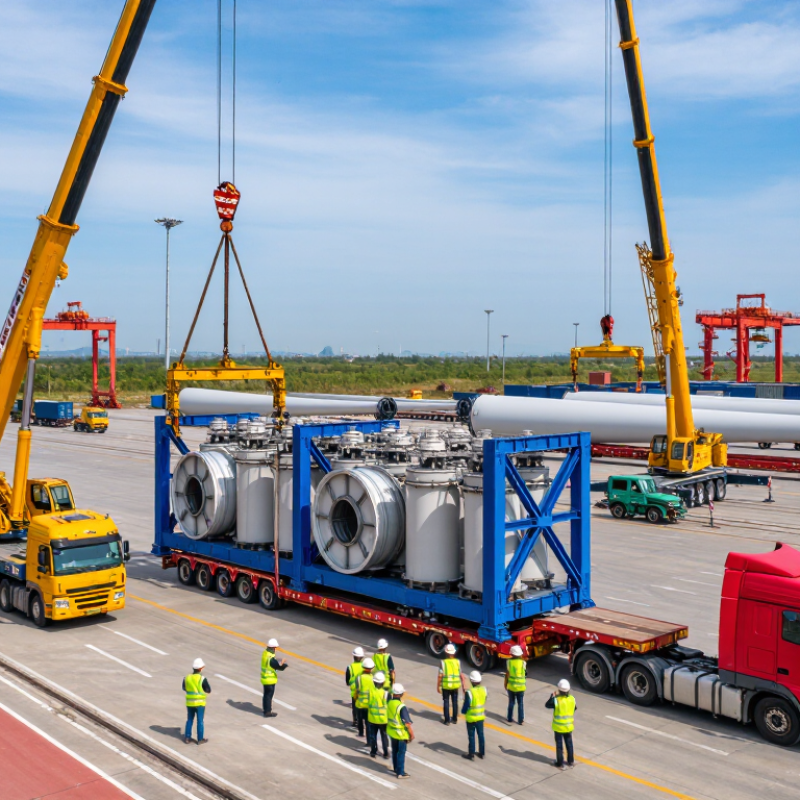
10 Best Over-Dimensional Cargo Logistics Services Worldwide

Definition and Scope of Over-Dimensional Cargo Logistics

Over-dimensional cargo refers to freight that exceeds standard limits for length, width, height, or weight. These limits vary by country, road class, bridge capacity, and transport mode. The term is not perfectly uniform. A turbine blade may be legal on one route but restricted on another. The scope includes industrial machinery, transformers, modular buildings, bridge sections, and wind-energy components. It covers route surveys, permits, escorts, lifting plans, port handling, and final-site delivery.

The business is part of project logistics, not simple trucking. Cargo may move by road, rail, barge, and ocean vessel before reaching a construction site. UNCTAD’s Review of Maritime Transport 2023 states that over 80% of global merchandise trade by volume moves by sea. This highlights the importance of port access and vessel scheduling. The World Bank’s Logistics Performance Index 2023 assessed 139 economies and stressed supply-chain reliability, tracking, and timely delivery. For oversized cargo, one missed bridge window can delay cranes, crews, and installation work. Paper planning alone is insufficient.

Tips: Measure every cargo point, including temporary supports and packaging. Confirm axle loads, turning radii, overhead cables, and weather exposure. Use digital route simulations, but verify them with local engineering teams. Experience matters here. A promising route can still fail at a narrow village corner. Cost estimates should include escorts, standby equipment, storage, and possible redesigns. Safety records, insurance coverage, lifting certificates, and documented contingency plans deserve equal attention.

10 Best Over-Dimensional Cargo Logistics Services Worldwide

Definition and Scope of Over-Dimensional Cargo Logistics

Over-dimensional cargo logistics covers the planning, transportation and delivery of freight that exceeds standard legal limits for road or multimodal transport in at least one dimension, including length, width, height or weight. The chart presents the core service capabilities required for a complete worldwide ODC logistics solution. Scores indicate relative operational importance on a 100-point planning scale, not company rankings or market-share data.

Key Selection Criteria for Global Heavy-Haul Logistics Providers

Key Selection Criteria for Global Heavy-Haul Logistics Providers

Choosing a heavy-haul provider requires more than comparing freight rates. Route engineering, bridge surveys, axle-load planning, and permit coordination should come first. The World Bank’s Logistics Performance Index 2023 evaluates customs, infrastructure, shipment reliability, logistics competence, tracking, and timeliness. These dimensions offer a practical screening framework. Ask for recent project evidence, not polished claims.

Cargo visibility is equally important. UNCTAD reports that maritime transport carries over 80% of global merchandise trade by volume. A delayed port slot can disrupt cranes, escorts, storage, and installation crews.

Reliable providers should show milestone tracking, exception alerts, and documented recovery plans. Request sample status reports. The details matter.

Safety controls need measurable proof. Examine lifting plans, equipment inspection records, driver qualifications, insurance coverage, and emergency procedures. Check whether subcontractors follow the same standards. A low quotation may hide weak contingency planning. That warning is easy to overlook.

Emissions reporting also deserves attention, especially when projects involve several transport modes. The International Transport Forum’s Transport Outlook highlights rising freight demand and growing pressure to reduce transport emissions.

Still, no scorecard is perfect. Weather, infrastructure changes, and inaccurate cargo dimensions can defeat excellent planning. Select providers that admit these risks and explain how they learn from near misses, delays, and revised route assumptions.

Top Over-Dimensional Cargo Logistics Services Worldwide

Top over-dimensional cargo logistics services worldwide are judged by execution, not glossy fleet photographs. These movements may involve a 42-ton transformer, a 5.2-meter-wide vessel, or a 70-meter wind blade. The World Bank’s 2023 Logistics Performance Index compares customs, infrastructure, competence, tracking, and timeliness across 139 economies. That framework matters. A capable provider converts those indicators into route surveys, permit matrices, lifting plans, and milestone updates. UNCTAD reports that ships carry over 80% of global merchandise trade by volume, making port compatibility essential for abnormal loads.

Top providers combine engineering with local operational knowledge. They check bridge clearances, axle limits, turning radii, pavement strength, tide windows, and crane charts before booking equipment. They also model weather exposure and border delays, because one missed possession can strand cargo and crews. The International Transport Forum’s Transport Outlook 2023 links rising freight demand with urgent decarbonisation pressure. Can the service reduce empty running and select lower-emission modes without risking safety? Planning remains imperfect. Survey data can become outdated. Field verification is still necessary.

Tips: Share certified dimensions, weight distribution, center of gravity, lifting points, and delivery restrictions early. Request a physical route survey, contingency route, port handling method, and named escalation contact. Ask for evidence, not promises. Check insurance limits and responsibility at every handover. Keep a live dashboard, but retain human calls when conditions change.

Specialized Equipment, Routes, and Handling Capabilities

10 Best Over-Dimensional Cargo Logistics Services Worldwide

Moving over-dimensional cargo is an engineering exercise, not simply a longer truck journey. Reliable logistics services begin with a measured cargo profile: length, width, height, weight, center of gravity, and lifting points. Teams then match equipment to risk. Hydraulic modular trailers distribute axle loads across bridges and uneven yards. Self-propelled modular transporters help position transformers, vessels, and industrial frames within tight sites. Crane studies confirm lifting radius, ground pressure, wind limits, and temporary support requirements. Sometimes, jacking and skidding is safer than a single heavy lift.

Route planning requires more than checking road distance. Specialists survey bridge clearances, turning radii, gradients, pavement strength, overhead cables, and restricted access points. A route can look perfect on a digital map and fail at one low bridge. Approved traffic arrangements, escort vehicles, temporary signs, and utility coordination must match local requirements. Port and rail connections also need compatible ramps, lifting capacity, and secure staging areas. Weather matters, especially when high-sided cargo meets coastal wind.

Handling quality depends on disciplined communication. Operators use load plans, axle calculations, lifting drawings, and condition checks before movement. GPS tracking supports coordination, but it cannot replace a person watching a tight turn. Small delays are acceptable when they prevent equipment damage. Plans are rarely perfect. Field conditions may expose poor assumptions, demanding a safer revision rather than stubborn execution. Clear reporting, trained crews, and documented inspections make international projects more dependable.

10 Best Over-Dimensional Cargo Logistics Services Worldwide - Specialized Equipment, Routes, and Handling Capabilities
No. Service Category Typical Over-Dimensional Cargo Specialized Equipment Typical Cargo Envelope Typical Weight Range Key International Routes Handling Capabilities Primary Planning and Compliance Needs
1 Heavy-Lift Project Shipping Power-generation modules, transformers, turbines, compressors, and industrial skids Heavy-lift vessels, roll-on/roll-off ships, hydraulic trailers, self-propelled modular transporters, and strand jacks Up to approximately 60 m long, 12 m wide, or 10 m high depending on the transport mode 100–3,000+ metric tonnes per piece Asia–Middle East, Europe–North America, East Asia–Europe, and intra-European project corridors Port lifting plans, load-spreading engineering, route surveys, quay-strength checks, tandem lifting, and synchronized multi-axle moves Cargo drawings, verified gross mass, lifting plans, marine insurance, customs entries, permits, and engineered method statements
2 Wind-Turbine Component Logistics Blades, tower sections, nacelles, hubs, and generator assemblies Blade trailers, extendable flatbeds, low-loaders, modular trailers, and specialized port lifting equipment Blades commonly 50–85 m long; tower sections may exceed 5 m in diameter 20–150 metric tonnes per component Manufacturing hubs to onshore wind farms in Europe, North America, Latin America, India, and Australia Blade lifting, controlled turning, temporary road furniture removal, bridge assessments, tight-radius steering, and port staging Oversize road permits, route-clearance surveys, axle-load calculations, escort plans, lifting certificates, and installation schedules
3 Oil, Gas, and Petrochemical Modules Pressure vessels, process modules, pipe racks, heat exchangers, and refinery equipment Mafi trailers, modular hydraulic axle lines, heavy-lift cranes, barges, and low-bed transporters Commonly 20–80 m long, 5–15 m wide, and 4–12 m high 50–2,000+ metric tonnes Gulf region–Asia, Europe–Middle East, North America–Latin America, and coastal fabrication-yard corridors Ro-ro loading, skidding, roll-up operations, barge transfers, temporary bridge reinforcement, and modular assembly logistics Hazardous-area declarations where applicable, lifting studies, port permits, customs documentation, and route risk assessments
4 Mining and Quarry Equipment Transport Mining trucks, crushers, screens, excavators, draglines, and conveyor systems Detachable gooseneck trailers, multi-axle platform trailers, modular transporters, heavy-haul railcars, and barges Up to approximately 6 m wide and 5 m high for road movements; larger units may require disassembly 40–400 metric tonnes per unit Manufacturing centers to Africa, South America, Central Asia, Australia, and North American mining regions Partial dismantling, field reassembly, road-strength verification, axle-group configuration, and multimodal transfers Oversize permits, axle-weight approvals, packing lists, equipment dimensions, customs classification, and site-access plans
5 Rail and Mass-Transit Equipment Logistics Locomotives, passenger railcars, metro cars, trams, and track-maintenance machines Rail-capable flatcars, depressed-center railcars, well wagons, hydraulic trailers, and lifting gantries Typically 20–30 m long, 3–4 m wide, and 3.5–5 m high per rail vehicle 30–150 metric tonnes per vehicle Europe–Central Asia, East Asia–Europe, North American domestic corridors, and port-to-inland rail networks Gauge clearance checks, bogie removal or installation, synchronized lifting, rail-interface inspections, and road-rail interchange Rail gauge approvals, route compatibility studies, lifting certificates, customs documents, and securement plans
6 Aerospace and Space Hardware Transport Aircraft fuselage sections, wings, rocket stages, satellite containers, and test equipment Climate-controlled trailers, air-ride vehicles, specialized cradles, heavy-lift aircraft, and dedicated ocean containers Commonly 15–45 m long, 4–9 m wide, with strict vibration and clearance limits 10–250 metric tonnes North America–Europe, Europe–French Guiana, East Asia–North America, and aerospace manufacturing clusters Shock and vibration monitoring, clean handling, humidity control, precision cradling, security escort, and controlled-access transfers Export-control reviews, chain-of-custody records, handling procedures, security plans, customs entries, and environmental specifications
7 Marine and Shipyard Equipment Logistics Ship engines, propellers, hull sections, offshore structures, and subsea equipment Heavy-lift barges, floating cranes, SPMTs, self-propelled barges, roll trailers, and quayside cranes Frequently 20–100 m long; width and height depend on vessel or offshore structure design 50–5,000+ metric tonnes North Sea, Mediterranean, Gulf of Mexico, Middle East, Southeast Asia, and East Asian shipyard corridors Quayside roll-on/roll-off, float-on/float-off, sea fastening, ballast control, tidal planning, and offshore loadout operations Marine warranty surveys, sea-fastening calculations, stability documents, port approvals, customs records, and weather limits
8 Infrastructure and Civil-Construction Haulage Bridge beams, tunnel-boring machines, precast segments, piling rigs, and large structural assemblies Extendable trailers, girder transporters, modular axle lines, low-loaders, and temporary lifting frames Up to approximately 80 m long for bridge elements; width often ranges from 4–10 m 30–800 metric tonnes Urban and regional corridors across Europe, North America, the Gulf region, Southeast Asia, and Australia Night movements, traffic management, bridge surveys, utility coordination, temporary road works, and site-access engineering Municipal permits, police or escort coordination, utility-clearance plans, structural assessments, and construction-site schedules
9 Energy-Storage and Electrical Grid Projects Large transformers, reactor units, grid substations, battery-system enclosures, and switchgear assemblies Hydraulic platform trailers, low-bed trailers, heavy-lift cranes, transformer transporters, and shock-monitored vehicles Typically 8–30 m long, 3–6 m wide, and 3–6 m high per major unit 20–600 metric tonnes East Asia–Europe, East Asia–North America, European grid corridors, and domestic utility-project routes Center-of-gravity control, tilt monitoring, controlled jacking, transformer rotation, energized-site exclusion zones, and final positioning Electrical equipment specifications, lifting studies, dangerous-goods reviews where applicable, permits, insurance, and commissioning schedules
10 Multimodal Project-Cargo Coordination Mixed industrial packages requiring ocean, inland waterway, rail, road, and airfreight combinations Flat racks, open-top units, heavy-lift ships, barges, modular trailers, rail wagons, and cargo aircraft From container-overweight cargo to project pieces exceeding 50 m in length 5–1,000+ metric tonnes per piece Global origin-to-project-site movements across major ports, inland terminals, rail hubs, and remote destinations End-to-end route engineering, transshipment planning, temporary storage, cargo consolidation, satellite tracking, and last-mile delivery Multimodal transport plans, cargo insurance, customs and transit documents, permits, packing certificates, and project risk registers
Reference note: The dimensions, weights, equipment types, and route examples are industry-standard planning ranges for over-dimensional and project cargo. Actual limits vary by vessel, port, road classification, bridge capacity, rail gauge, local permits, weather, cargo center of gravity, and destination-site conditions. Final transport plans require engineering validation and approval by the relevant authorities.

Safety, Compliance, Costs, and Project Planning Considerations

Choosing among the best over-dimensional cargo logistics services worldwide requires more than comparing freight rates. Safety begins with accurate cargo measurements, weight distribution, lifting points, and center-of-gravity data. Experienced planners use route surveys to identify low bridges, weak roads, sharp turns, and restricted access. A few centimeters can change the entire transport method. Plans change.

Compliance must be checked before equipment is booked. Permits, escort requirements, axle-load limits, customs documents, and local operating hours vary by jurisdiction. Reliable providers explain these requirements in writing and maintain clear records. They should also provide certified equipment, trained operators, cargo securing plans, and emergency contacts. Independent inspections can reveal problems that paperwork misses. That matters.

Cost planning should include more than the quoted transport fee. Budget for engineering reviews, permits, escorts, lifting operations, temporary road works, storage, insurance, and possible delays. A realistic schedule includes weather, border processing, equipment availability, and site readiness. In project work, I have seen a low initial quote become expensive after an access problem was discovered. Careful providers offer milestone updates, tracking evidence, and documented change controls. Still, no plan is perfect; unusual traffic restrictions or inaccurate site information may require a safer, slower decision.

FAQS

What is over-dimensional cargo logistics?

It manages freight exceeding standard length, width, height, or weight limits. It is not simple trucking. Cargo may include transformers, industrial machinery, bridge sections, or wind-energy components.

Why can the same cargo face different restrictions?

Limits vary by country, road class, bridge capacity, and transport method. A turbine blade may fit one route but fail another. Local checks remain essential.

What transport modes can oversized cargo use?

Shipments may travel by road, rail, barge, and ocean vessel. Port access and vessel schedules can control the entire delivery. One missed loading window may delay several work teams.

What should a route survey examine?

Survey teams should check bridge clearances, axle loads, turning radii, cables, and pavement strength. They should also review weather exposure and narrow village corners. Small details matter.

Which measurements should the shipper provide?

Provide certified length, width, height, weight distribution, center of gravity, and lifting points. Include packaging and temporary supports. Missing details can force costly redesigns.

How should a logistics provider be evaluated?

Review route surveys, permits, lifting plans, tracking methods, insurance limits, and contingency plans. Ask for evidence, not promises. Fleet photographs prove little.

Why are cranes and port handling important?

Heavy cargo may require special cranes, lifting certificates, storage areas, and carefully timed port access. Crane capacity must match the cargo’s weight and lifting points. A small mismatch can stop operations.

Can digital route simulations guarantee success?

No. Digital models help identify risks, but conditions can change. Survey data may become outdated. Physical verification and local engineering judgment still matter.

How can oversized cargo planning reduce delays?

Use milestone updates, a live dashboard, named escalation contacts, and a backup route. Include standby equipment, storage, escorts, and possible weather delays in the budget. Plans can fail. That possibility deserves honest discussion.

Conclusion

This guide explores Over-Dimensional Cargo Logistics, a specialized field focused on transporting oversized, heavy, or unusually shaped equipment that exceeds standard freight dimensions or weight limits. It explains the scope of these services and outlines the key factors for selecting a reliable global heavy-haul provider, including technical expertise, international coordination, route planning, fleet capacity, communication, and project management experience.

The article reviews leading types of over-dimensional logistics services worldwide, with attention to specialized trailers, lifting systems, escort vehicles, port handling, multimodal transport, and engineered route solutions. It also discusses how providers manage bridges, road restrictions, permits, weather, loading procedures, and secure delivery. Finally, it highlights the importance of safety programs, regulatory compliance, transparent cost estimates, contingency planning, and clear scheduling when organizing complex cargo movements. Careful preparation helps reduce delays, control risks, and ensure that each project is completed efficiently and responsibly.


Seraphina

Seraphina

Seraphina is a dedicated marketing professional with a deep understanding of the company’s products, customers, and evolving industry needs. Through her work, she transforms complex product features into clear, practical, and engaging insights that help readers make informed decisions. She......