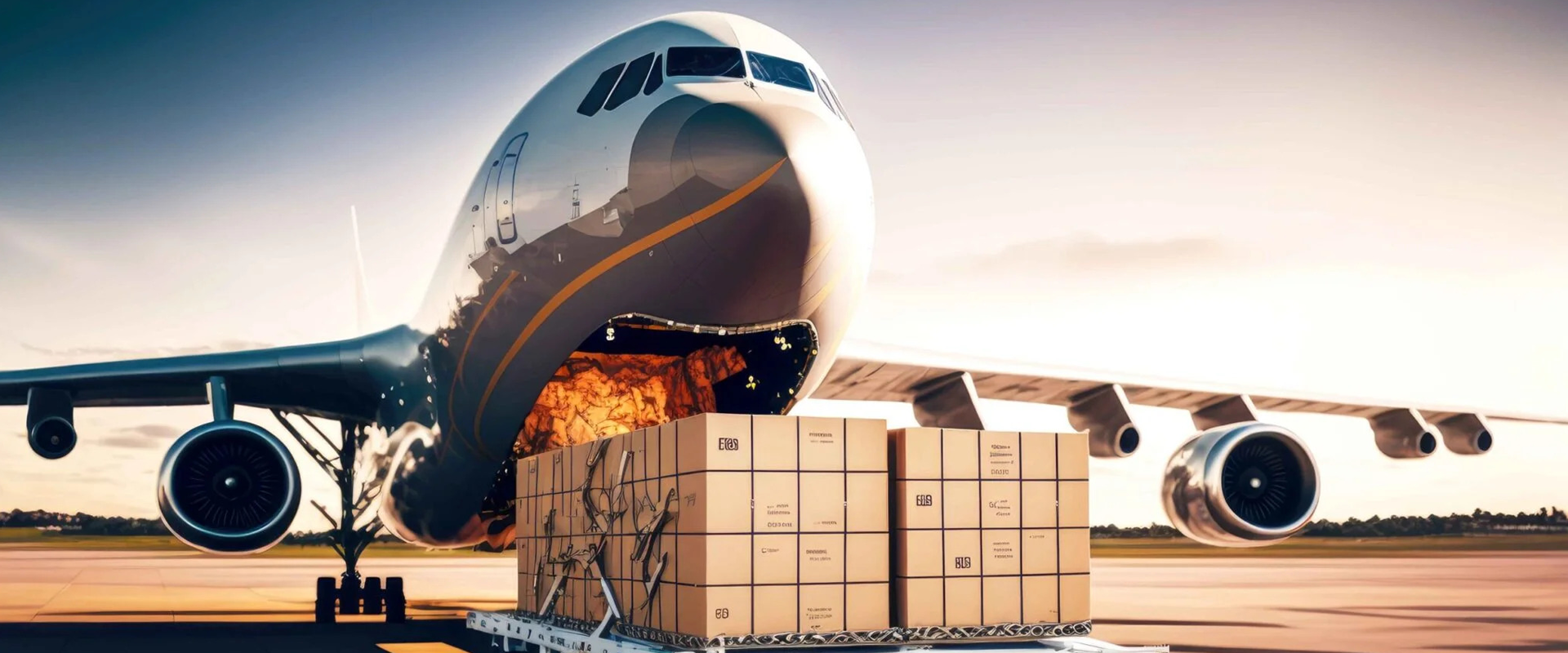
Expert perspectives on Saudi Arabia customs, ocean & air freight, and global supply chain strategies.

Latest market trends, port developments, and international container freight analysis.
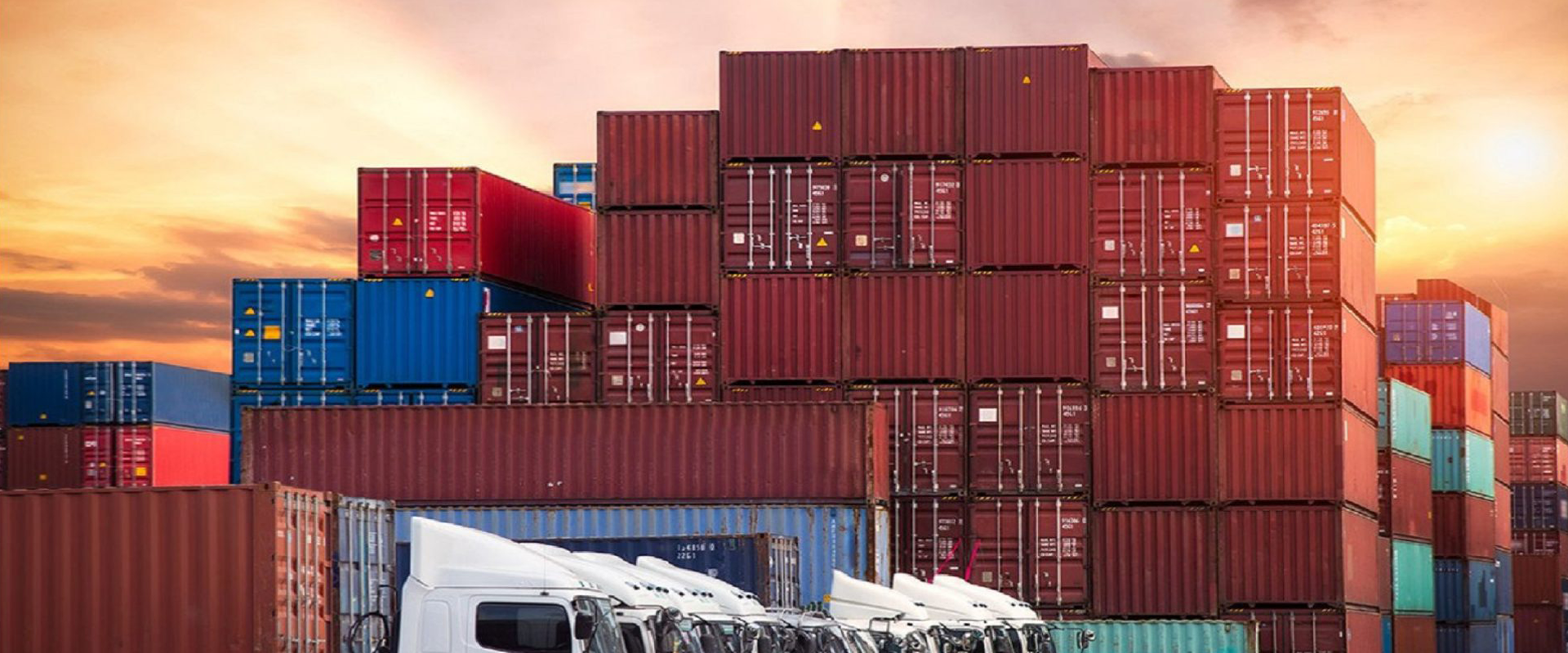
Technical case studies and operational insights for complex industrial project transport.
Select from our vetted multimodal transport contracts, heavy lift project charters, and door-to-door DDP execution models.
A deep dive into vendor qualification, risk mitigation, and semantic intent optimization for global procurement directors.
The global trade architecture is undergoing a structural transformation. Procuring logistics services from a premier China cross border freight forwarding supplier is no longer simply a transaction focused on booking container space or securing air air-waybill (AWB) slots. In modern supply chain management, selecting the right freight partner directly impacts an enterprise's total cost of ownership (TCO), regulatory compliance, duty optimization, and overall supply chain resilience.
As multinational corporations, EPC contractors, and global buyers navigate geopolitical shifts, fluctuating maritime carrier alliances, and strict customs enforcement protocols—such as Saudi Arabia’s ZATCA integration, US CBP E-Commerce rules, and EU CBAM environmental reporting—the demand for verified, high-E-E-A-T (Experience, Expertise, Authoritativeness, and Trustworthiness) freight forwarders in China has surged.
Proven operational excellence backed by global certifications, enterprise project track records, and end-to-end control.
Our organization holds Class-A Freight Forwarding licenses, licensed NVOCC accreditation, and direct Service Contracts (SC) with top-tier ocean carriers including Maersk, COSCO, CMA CGM, ONE, and MSC. This ensures guaranteed space allocation even during peak congestion seasons.
Eliminate costly port demurrage and detention charges. Our dedicated team of licensed customs brokers specializes in complex tariff classification (HS Code mapping), valuation auditing, FTA origin documentation, and DDP/DAP door-to-door tax settlement across the GCC, EU, and North America.
Trusted by energy giants such as SABIC, Saudi Aramco, NEOM projects, Hyundai Heavy Industries, and SIPCHEM. We engineer charter routes, structural load-bearing analyses, roll-on/roll-off (RoRo) execution, and breakbulk vessel charters for oversized industrial assets.


Quantitative comparison of China export logistics services to guide enterprise procurement strategy.
| Transport Modality | Avg. Transit Time | Cost Efficiency | Customs Risk Index | Ideal Cargo Profile | DDP Support |
|---|---|---|---|---|---|
| Full Air Cargo Charter | 1 – 3 Days | Premium | Ultra Low | Oversized Machinery, High-Value Tech, Time-Critical EPC Parts | Full DDP |
| Scheduled Express Air Freight | 3 – 7 Days | Moderate-High | Low | Electronics, Auto Components, Medical Supplies, Samples | Full DDP |
| Ocean Freight FCL (20GP/40HQ) | 18 – 38 Days | Highest | Medium | Bulk Raw Materials, Manufactured Goods, Industrial Equipment | Full DDP |
| Ocean Freight LCL Consolidation | 22 – 42 Days | High | Medium | Small-to-Medium Shipments (1–15 CBM), Multi-Supplier Goods | Full DDP |
| Breakbulk & Heavy Lift RoRo | 25 – 48 Days | Custom Tariff | Complex Clearance | Transformers, Oil & Gas Turbines, Structural Steel, Modules | Project DDP |
Key technological and regulatory shifts redefining China cross-border logistics partnerships.
Modern procurement executives no longer accept delayed status reports. Leading China freight forwarders are integrating real-time telemetry IoT sensors inside containers, monitoring ambient temperature, humidity, tilt, shock, and GPS location in real time. This level of granular visibility guarantees accountability across multi-leg transit corridors.
Digital clearance integration via direct API connectivity with global tax and customs databases (such as Saudi FASAH, US ACE, and EU ICS2) enables pre-arrival clearance. By transmitting digitized commercial invoices, packing lists, and certificates of origin prior to vessel berth, transit delays are reduced by up to 70%.
With ESG compliance mandates spreading globally, freight forwarders are providing carbon footprint calculators per TEU/KG transported. Utilizing SAF (Sustainable Aviation Fuel) options for air cargo and eco-friendly LNG dual-fuel ocean vessels enables enterprise buyers to meet Scope 3 emissions reduction targets.
Traditional FOB and CIF terms are increasingly replaced by Delivered Duty Paid (DDP). Procurement teams prefer turn-key logistics where the supplier handles all export documentation, shipping, destination customs clearance, and final-mile delivery under a single transparent invoice.
Analyzing global routing shifts, capacity management, and maritime corridor resilience.
Global ocean freight corridors between Asia, Europe, and the Middle East continue to navigate operational challenges, including Red Sea routing adjustments, Cape of Good Hope re-routings, and port congestion at key transshipment hubs like Singapore and Jebel Ali. Transit times for China-to-Europe and China-to-GCC shipments have expanded by 10 to 14 days on standard ocean loops.
To mitigate these schedule reliability disruptions, top China cross-border freight forwarding suppliers are deploying adaptive multimodal strategies: combining ocean freight to regional ports with sea-air charters, cross-border road trucking networks across Asia and the Middle East, and dedicated air charter capacity. This operational agility protects production schedules and ensures timely delivery for critical project cargo.
Essential criteria to verify supplier authoritativeness and ensure zero-defect supply chain execution.
Ensure the supplier possesses an official Class-A freight forwarder license, FMC/NVOCC registration, and active memberships in global networks like WCA (World Cargo Alliance) or FIATA. This provides financial default protection and verified global agent coverage.
Confirm that the forwarder operates dedicated customs clearance desks in target destination countries. Suppliers with in-house clearance capabilities prevent costly third-party broker misclassifications and eliminate border hold-ups.
Ask whether the supplier maintains direct Service Contracts (SC) with ocean carriers and airlines, or relies on sub-tier co-loaders. Direct contracts guarantee priority roll-over protection during peak shipping surges.
Verify that your freight forwarder provides comprehensive All-Risk Marine Insurance policies (Institute Cargo Clauses A). Carrier liability limits are historically minimal ($2/kg for air, $500/package for ocean); robust insurance is critical for high-value cargo.
Request verified case studies of heavy-lift, breakbulk, or multi-supplier DDP consolidations. Tier-1 suppliers willingly provide verifiable references from industrial leaders, demonstrating proven operational expertise.
Detailed answers to complex logistics, customs, and procurement queries.
Under Free On Board (FOB) terms, the buyer takes full operational responsibility, risk, and cost as soon as the cargo is loaded onto the vessel in China. The buyer must arrange ocean/air freight, import customs clearance, duty payment, and inland transport. Under Delivered Duty Paid (DDP), the China freight forwarder manages the entire end-to-end process—handling export clearance, international transport, import customs, duties/taxes, and final-door delivery. DDP provides complete price predictability and eliminates buyer administrative burdens.
Air freight charges are calculated based on whichever figure is higher: Actual Gross Weight (in kg) or Volumetric (Dimensional) Weight. Volumetric weight is calculated using the industry standard IATA formula: (Length × Width × Height in cm) / 6000 (or 167 kg per cubic meter). Professional forwarders offer cargo re-packaging and volumetric optimization at origin warehouses to pack cargo tightly and reduce chargeable weight.
Port demurrage (charges for containers remaining inside the port terminal past free days) and detention (charges for holding empty containers past free days) can quickly erode profit margins. Working with an experienced forwarder who pre-clears customs documents prior to vessel arrival, negotiates extended free time (e.g., 14 to 21 days free detention) directly with shipping lines, and maintains dedicated drayage truck fleets ensures rapid container turn-around.
Project cargo transportation requires rigorous engineering documentation, including detailed packing lists with precise center-of-gravity (COG) calculations, lashing/securing plans verified by marine surveyors, lifting point diagrams, material safety data sheets (MSDS) for hazardous components, and export quality inspection certificates. In addition, obtaining road movement permits for over-dimensional cargo in both origin and destination countries is mandatory.
WCA (World Cargo Alliance) and FIATA certifications ensure that the freight forwarder adheres to strict international financial integrity standards, operational quality benchmarks, and code-of-conduct compliance. WCA network membership provides built-in financial protection guarantees between partner agents, safeguarding buyers against freight fraud or operational defaults across international borders.
Air charter execution involves five key stages: 1) Cargo profile assessment (dimensions, gross weight, floor load limits); 2) Aircraft type selection (e.g., Boeing 747-8F, Antonov AN-124, or Boeing 77F); 3) Flight permit application (overflight rights and landing slots); 4) Origin airport ground handling, palletization (ULD building), and customs clearance; and 5) Flight execution with real-time flight tracking and destination ramp coordination.
Connect with our senior logistics engineering team to request customized freight rate matrices, project charter feasibility studies, or comprehensive DDP door-to-door catalog pricing.